
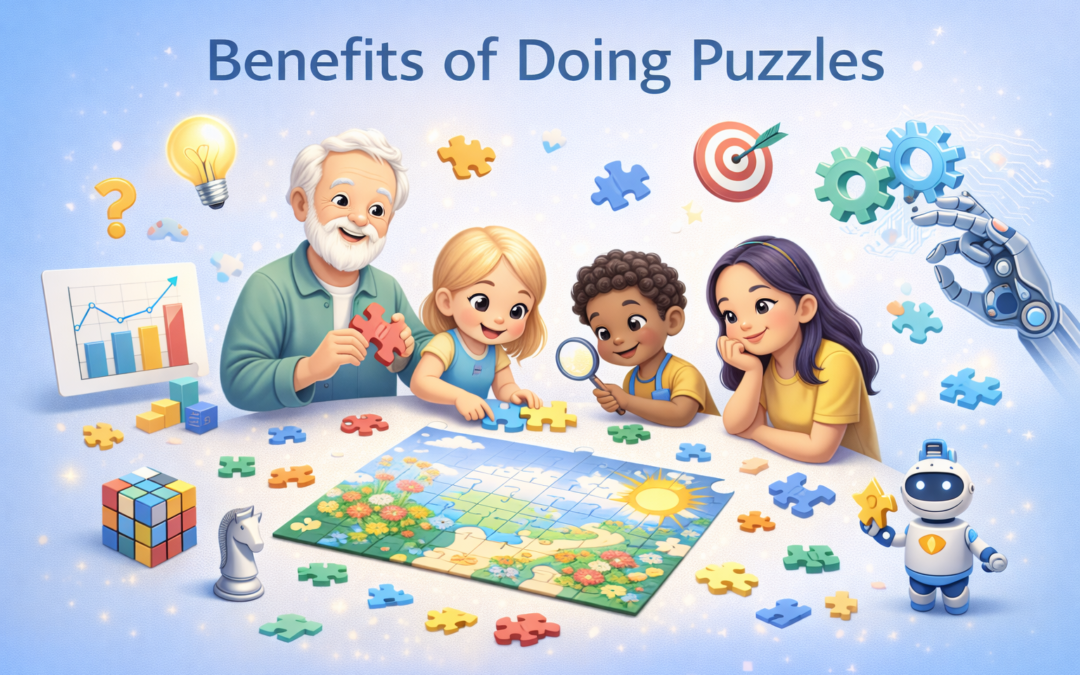
In our modern quest for peak performance, we often look toward expensive supplements and high-tech biohacking tools to sharpen our minds. However, one of the most potent cognitive enhancers has been sitting on our coffee tables for centuries. The benefits of doing puzzles extend far beyond simple boredom-busting; they represent a comprehensive neurological workout that impacts brain structure, emotional intelligence, and long-term psychological health.
Whether you are navigating the complex variables of a Sudoku grid or scanning 2,000 jigsaw pieces for a specific shade of indigo, your brain is engaged in a state of high-intensity aerobic exercise. This mental exertion triggers the release of vital neurotransmitters and stimulates neuroplasticity, the brain's remarkable ability to reorganize itself by forming new neural connections.
As we navigate an era of digital distraction, the focused, singular attention required by puzzles offers a rare sanctuary. This guide explores the multi-faceted benefits of puzzling, demonstrating why this timeless activity is an essential component of a high-performance lifestyle and a primary defense against cognitive decline.
The primary benefits of doing puzzles include enhanced neuroplasticity, improved short-term memory, and the induction of a meditative flow state. By engaging both the creative and logical hemispheres of the brain, puzzles lower cortisol levels, increase dopamine production, and build "cognitive reserve," which can delay the onset of neurodegenerative symptoms by several years.
Structural Mastery: Engineering a Better Brain
The brain is not a static organ; it is a dynamic system that physically adapts to the challenges it faces. Puzzling acts as a sculptor for your neural architecture, refining the way information is processed and stored.
BDNF Production
Solving complex puzzles stimulates Brain-Derived Neurotrophic Factor, a protein that supports the survival of existing neurons and encourages the growth of new ones.
Working Memory
Puzzles require you to hold multiple variables in your mind at once. This constant "refreshing" of data expands your mental RAM and improves short-term recall.
Synaptic Plasticity
Every time you solve a unique problem, your synapses grow stronger. This increases the speed of communication between different regions of the brain.
Spatial Awareness
Visual puzzles like jigsaws train the parietal lobe, improving your ability to rotate objects mentally and understand complex geometric relationships.
Detail Orientation
Searching for minute differences in patterns sharpens your visual acuity and trains the brain to ignore irrelevant data while focusing on critical details.
Hemispheric Sync
Logic puzzles require the left brain (order) and right brain (intuition) to work in unison, leading to more creative and integrated problem-solving skills.
The Chemistry of Achievement: Dopamine and Reward
One of the most immediate benefits of doing puzzles is the chemical reward system they activate. Humans are biologically hardwired to solve problems. When we encounter a puzzle, our brain identifies a "gap" in knowledge, which creates a state of mild tension.
The moment a piece fits or a crossword clue is solved, the brain releases a burst of dopamine. This is not just a "feel-good" chemical; it is a critical driver of motivation and focus. By providing a series of small, achievable wins, puzzles train the brain to associate effort with reward, which can significantly improve your productivity in other areas of life, such as your career or education.
Inducing the Meditative "Flow"
In psychology, "Flow" is a state of total immersion in an activity where the ego vanishes and time seems to distort. Puzzles are the perfect "Flow" machines because they provide clear goals and immediate feedback while perfectly balancing difficulty with skill level.
- Reduced Anxiety: While in flow, the "Default Mode Network"—the part of the brain responsible for worrying and rumination—is quieted.
- Autotelic Experience: The activity becomes its own reward, providing a sense of intrinsic joy that doesn't depend on external validation.
- Parasympathetic Activation: Despite the mental effort, the rhythmic nature of puzzling can lower your heart rate and activate the "rest and digest" system.
Psychological Resilience: The Software of the Mind
While the hardware (biology) is being upgraded, the software (your emotional regulation) is also being refined. Puzzles act as a safe laboratory for testing your emotional responses to challenge and frustration.
Cortisol Mitigation
The focused immersion of puzzling acts as a biological shield against stress, significantly reducing levels of the stress hormone cortisol in the blood.
Emotional Stability
Learning to stay calm when a solution is elusive builds patience and emotional regulation, preventing "hot-headed" reactions in real-world crises.
Mindfulness Training
Puzzles are a form of "active meditation." They force you into the present moment, offering the same benefits as traditional mindfulness with less boredom.
Grit Development
The persistence required to finish a 2,000-piece puzzle translates into "grit"—the ability to stay the course through long-term professional or personal projects.
Self-Esteem Boost
The cumulative effect of solving hundreds of small problems builds a "can-do" attitude, reinforcing your belief in your own cognitive competence.
Mood Elevation
The consistent release of reward chemicals can act as a natural antidepressant, providing a healthy outlet for achieving pleasure and satisfaction.
Professional Mastery: Puzzles in the High-Performance Workplace
It is no coincidence that many of the world’s most elite professionals are avid puzzlers. From software engineers and surgeons to strategic planners, the benefits of doing puzzles translate directly into high-stakes environments.
Strategic Elimination: Puzzles teach you to ignore the impossible and focus on the probable. In business, this is the essence of strategy. By practicing deduction in a low-stakes grid, you refine your ability to make rapid, accurate decisions when the stakes are high.
Cognitive Flexibility: A common trait among successful leaders is the ability to shift their perspective. When you rotate a jigsaw piece or look at a riddle from a different angle, you are training your brain to avoid "cognitive tunneling"—the dangerous habit of sticking to a failing plan simply because it was the first one you had.
The Longevity Blueprint: Life Skills & Future Health
The benefits of puzzling aren't just for the present; they are an investment in your future self. Puzzles are one of the few activities that provide value across every decade of life.
Cognitive Reserve
Puzzles build a "surplus" of neural connections. This reserve allows the brain to continue functioning normally even if some cells are lost to aging.
Social Cohesion
Collaborative puzzling fosters communication and teamwork, creating deep bonds between family members and friends without the need for digital screens.
Dementia Delay
Research indicates that regular mental stimulation through puzzles can delay the clinical onset of Alzheimer's symptoms by up to 5 years.
Learning Capacity
By keeping the brain in a "learning state," puzzles make it easier for you to pick up new skills, languages, or hobbies at any age.
Visual Longevity
Scanning and focusing on small objects helps maintain the health of the visual system and the brain's ability to interpret complex imagery as we age.
Sleep Hygiene
Engaging in an analog puzzle before bed instead of looking at a phone screen helps regulate melatonin and prepares the brain for deep, restorative sleep.
Conclusion: The Ultimate Mental Multi-Vitamin
The benefits of doing puzzles are not anecdotal; they are a fundamental part of cognitive maintenance. In a world that prizes speed and shallow engagement, the slow, methodical, and deep work of puzzling is a revolutionary act. It restores our attention spans, strengthens our neural pathways, and provides a profound sense of satisfaction that digital shortcuts simply cannot replicate.
By incorporating puzzles into your weekly routine, you are doing more than just playing a game. You are building a more resilient brain, a more stable emotional core, and a protective barrier for your future health. Whether you choose a crossword, a jigsaw, or a logic grid, the result is the same: a sharper, calmer, and more capable version of yourself.
Performance FAQ
How often should I do puzzles to see benefits?
Consistency is more important than duration. Research suggests that 20 minutes of daily puzzling is more effective for building cognitive reserve than a single 5-hour session once a week.
Are digital puzzles as good as physical ones?
While digital puzzles offer the same logical challenges, they lack the tactile stimulation and the "digital detox" benefits of physical puzzles. For maximum stress reduction, physical puzzles are superior.
Which type of puzzle is best for the brain?
The "best" puzzle is the one that challenges you without causing overwhelming frustration. Rotating between word searches, Sudoku, and jigsaws is ideal because it engages different areas of the brain.
Can puzzles actually increase my IQ?
Puzzles improve "fluid intelligence" and processing speed, which are major components of IQ. While they may not change your raw IQ score significantly, they ensure you are using 100% of your current potential.
Are puzzles good for children's development?
Absolutely. Puzzles help children develop fine motor skills, spatial reasoning, and the "delayed gratification" required for academic success later in life.